
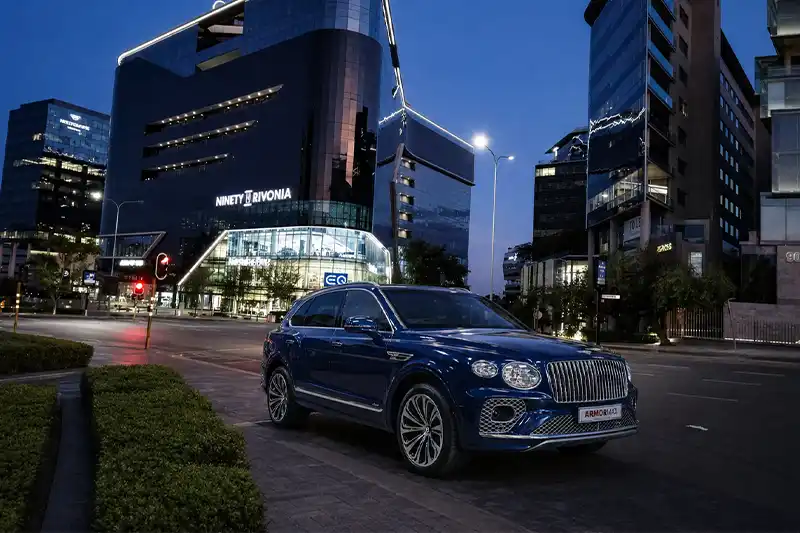
Most people do not think about security in technical terms. They think about how secure they feel. That feeling usually comes from control. We feel secure when our environment is managed, our exposure is reduced, and there are systems in place to protect us from what may go wrong.
This is why secure estates make sense. Access is controlled, visitors are screened, movement is monitored, patrols are visible and boundaries are defined. The environment is designed to reduce exposure. The same applies in commercial environments. Offices invest in access control, biometric systems, CCTV, cyber security, insurance, emergency procedures and layered safeguards. These are not emotional decisions. They are practical decisions based on known risks.
The road is different.
The road is a dynamic environment. It changes constantly. You move through it, rather than controlling it. Every intersection, traffic light, off-ramp, driveway, fuel stop and school run introduces variables you cannot manage in the same way you would manage a home, estate or office.
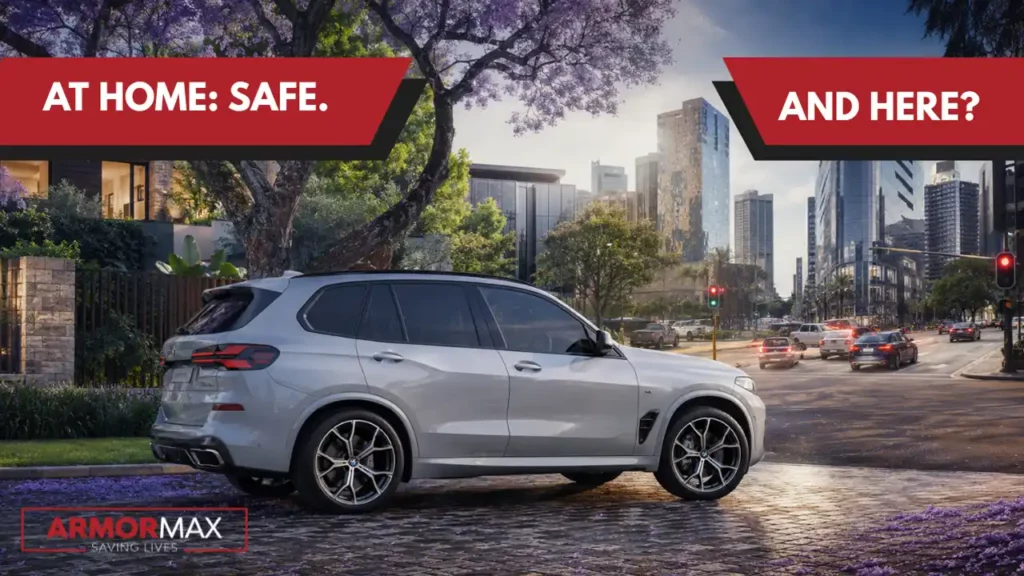
This is where a proper Threat and Risk Assessment becomes useful. A threat is the danger that exists in the environment. Risk is your level of exposure to that threat. Vulnerability is the gap between the threat and your ability to withstand or avoid it. Mitigation is what you put in place to reduce that exposure.
In South Africa, the threat of violent crime on the road is real. Hijackings, kidnappings, armed robberies, smash-and-grabs, targeted attacks, follow-home incidents and opportunistic violence are not limited to one demographic or one type of vehicle owner. That exposure is shaped by practical questions. Where do you drive? When do you drive? Who is in the vehicle with you? How predictable are your routes? How often are you stationary in traffic? How visible are you? How quickly can you remove yourself from a dangerous situation?
These are not fear-based questions. They are risk questions. Once you assess the risk honestly, the logic becomes clear. You cannot control the road in the same way you control a home or office. You cannot control who approaches your vehicle, who stops next to you, what happens in surrounding traffic, or whether an incident develops without warning. What you can control is your level of protection inside that environment.


That is where discreet vehicle armour fits into a broader security mindset.
An armoured vehicle is not a statement of fear. It is not about aggression, status or drawing attention. Done properly, it is a discreet mitigation measure. It creates a protective barrier between the occupants and the external threat while allowing the vehicle to remain practical, usable and visually normal.
Home security reduces exposure at home. Office security reduces exposure at work. Vehicle armour reduces exposure in transit.
For many South Africans, the security gap is not at the gate, behind the wall or inside the office. It is the space between those controlled environments. At Armormax, our role is to help close that gap by understanding the threat and building discreet protection around the people inside the vehicle. The objective is not to change how people live. It is to help them continue living, working and moving with greater confidence.
True security is not just about feeling safe in fixed environments. It is about reducing exposure wherever the risk exists and taking control by making the right decisions.
Armour your car with Armormax. Protect your freedom.
Media enquiries:
Michael Broom
011 462 6079
084 325 2744